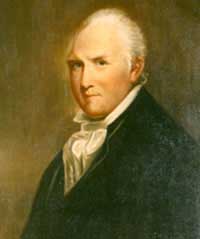
I call upon You, Lord, God of Abraham and God of Isaac and God of Jacob and Israel, You who are the Father of our Lord Jesus Christ, the God who, through the abundance of your mercy, was well-pleased towards us so that we may know You, who made heaven and earth, who rules over all, You who are the one and the true God, above whom there is no other God; You who, by our Lord Jesus Christ gave us the gift of the Holy Spirit, give to every one who reads this writing to know You, that You alone are God, to be strengthened in You, and to avoid every heretical and godless and impious teaching.

St Irenaeus of Lyons, Against the Heresies 3:6:4


Showing posts with label Church history. Show all posts

Tuesday, June 3, 2014

Robert Shaw on the Value of the Confession


The Westminster Confession of Faith contains a simple exhibition of the truth, based upon the Word of God; but its several propositions are laid in opposition to the heresies and errors which had been disseminated in various ages. It has, therefore, been a prominent object of the author of the Exposition to point out the numerous errors against which the statements in the Confession are directed. The reader will thus find the deliverance of the Westminster of Divines upon the various errors by which the truth has been corrupted in former times, and will be guarded against modern errors, which are generally only a revival of those that had previously disturbed the Church, and that had been long ago refuted.
                 
Robert Shaw, The Reformed Faith: An Exposition of the Westminster Confession of Faith, from the preface.

Saturday, April 26, 2014

Rev. George Gillepsie: This Day in PresByterian History

gillespieGeorgeSome thought that he was the one who framed that Shorter Catechism answer about God’s character. Other doubted that he was the author of it.  We may never know for sure, but it was stated that whoever framed the answer to the question, “What is God?” was the youngest minister present on the Assembly committee tasked with the question’s answer. And Rev. George Gillespie was the youngest minister present in that committee of the historic Westminster Assembly. Maybe only eternity will reveal for sure the real author of Shorter Catechism Number 4. Read more here.

Saturday, April 5, 2014

You might be a Redneck if...and Proud of It!!


Any number of our cultured readers might be upset if someone called them a “redneck.” And for good reason as this name speaks of someone in a disparaging way. But when you consider the origin of the word, our readers, especially those from a Scotch-Irish background, might to proud of to have someone speak of them in that way. Read more...

Thursday, March 20, 2014

Tuesday, December 24, 2013

Why the Need for Creeds - Pt. 2


“No Book But The Bible” is Unbiblical!

There are at least two reasons for this.

(1) The Bible itself is full of creeds, confessions, and catechism!

The following passages prove that it is unbiblical to say “No creeds! Or confessions! Or catechism!”

Creeds and Confessions:

Deuteronomy 6:4
Matthew 16:16
Matthew 28:18
Romans 10:9
1 Corinthians 8:6
1 Corinthians 12:3
1 Corinthians 15:3—7
Philippians 2:6—11
Colossians 1:15—20
1 Timothy 3:16
1 John 4:2

Catechesis:

Luke 1:1—4
Acts 18:24—25
Hebrews 6:1—2

(2) The apostles commanded their disciples to preserve the essentials of the Faith for future generations of the church, and they intended this to happen by means of creeds, confessions, and catechism.

Consider these words from the apostle Paul to his beloved disciple Timothy.

Follow the pattern of the sound words that you have heard from me, in the faith and love that are in Christ Jesus. By the Holy Spirit who dwells within us, guard the good deposit entrusted to you (2 Timothy 1:13—14 ESV).

The “pattern of sound words” is earlier called “sound doctrine” by Paul.

“Sound doctrine, in accordance with the gospel of the glory of the blessed God with which I have been entrusted” (1 Timothy 1:10c-11 ESV).

These “sound words” or “sound doctrine” do not point directly to the Bible, but rather to summaries and core doctrines that express what the Bible teaches on the most important facts of the gospel. These are what early church fathers, like Clement, Irenaeus and Tertullian later called the Regulae Fides, that is the Latin for the “Rule of Faith.” This referred to the summary of the non-negotiable key doctrines of the Christian faith, which have been believed and expressed by all Christians in the Apostles’ Creed for nearly 1700 years.

The apostles, then, commanded the core commitments of the Faith, as faithfully deduced from Scripture, according to the apostles’ understanding of the meaning and purpose of Father’s plan in sending Jesus Christ into the world, whose work is then applied to the church, individually and corporately, through the power and presence of the Holy Spirit.

Therefore, “No book but the Bible” is actually against the teaching of the Bible!

Saturday, May 25, 2013

The Promise of Catholic Calvinism, J. Tood Billings

In 1536, a 27 year old exile from France addressed Roman Catholic King Francis regarding a new religious movement that Francis opposed. This exile takes pains to deny that the teaching of the movement is, in fact "new" and "of recent birth." To the contrary, says the humanist scholar, the gospel preached in this movement is as "ancient" as Paul's gospel. Winchester Moreover, "if the contest were to be decided by patristic authority, the tide of victory would turn to our side."1 For the young Jean Calvin, the reform of the church entailed a rediscovery of the scriptures--and a rediscovery of the scriptural theology of the patristic writings from the church's first five centuries. Continue reading at Perspectives.

Wednesday, March 27, 2013

A word on the Word from Justin Martyr, a Re-Post

(This is a re-post from 2009.  I believe it is worthy of rereading time and again, and that it is most needful for Christians to hear today.  Enjoy.  KLS.) 

This is undoubtedly one of my favorite passages from the writings of Justin Martyr, one of the great early Church Apologists. It is the first chapter of his On The Resurrection. Nowhere have I read a clearer, more impassioned expression of presuppositionism’s principle thought. Apologetics is moving back to the future so to speak.

The word of truth is free, and carries its own authority, disdaining to fall under any skilful argument, or to endure the logical scrutiny of its hearers. But it would be believed for its own nobility, and for the confidence due to Him who sends it. Now the word of truth is sent from God; wherefore the freedom claimed by the truth is not arrogant. For being sent with authority, it were not fit that it should be required to produce proof of what is said; since neither is there any proof beyond itself, which is God. For every proof is more powerful and trustworthy than that which it proves; since what is disbelieved, until proof is produced, gets credit when such proof is produced, and is recognised as being what it was stated to be. But nothing is either more powerful or more trustworthy than the truth; so that he who requires proof of this is like one who wishes it demonstrated why the things that appear to the senses do appear. For the test of those things which are received through the reason, is sense; but of sense itself there is no test beyond itself. As then we bring those things which reason hunts after, to sense, and by it judge what kind of things they are, whether the things spoken be true or false, and then sit in judgment no longer, giving full credit to its decision; so also we refer all that is said regarding men and the world to the truth, and by it judge whether it be worthless or no. But the utterances of truth we judge by no separate test, giving full credit to itself. And God, the Father of the universe, who is the perfect intelligence, is the truth. And the Word, being His Son, came to us, having put on flesh, revealing both Himself and the Father, giving to us in Himself resurrection from the dead, and eternal life afterwards. And this is Jesus Christ, our Saviour and Lord. He, therefore, is Himself both the faith and the proof of Himself and of all things. Wherefore those who follow Him, and know Him, having faith in Him as their proof, shall rest in Him. But since the adversary does not cease to resist many, and uses many and divers arts to ensnare them, that he may seduce the faithful from their faith, and that he may prevent the faithless from believing, it seems to me necessary that we also, being armed with the invulnerable doctrines of the faith, do battle against him in behalf of the weak.

Sunday, February 24, 2013

St. Irenaeus on Lent—Its Diversity and Unity among the Faithful: A Good Word for the Modern Dilemma


For the controversy is not merely as regards the [paschal] day, but also as regards the form itself of the fast.  For some consider themselves bound to fast one day, others two days, other still more, while others do so during forty...And this variety among the observers of the fasts had not its origin in our time [i.e., mid-second century A.D.], but long before in that of our predecessors, some of whom probably, being not very accurate in their observance of it, handed down to posterity the custom as it had, through simplicity or private fancy, been introduced among them.  And yet nevertheless all these lived in peace one with another, and we also keep peace together.  Thus, in fact, the difference in observing the fast establishes the harmony of our common faith.

                                        —St. Irenaeus, Fragments from the Lost Writings of Irenaeus, III.